My Brilliant Science Fair Project in 1978
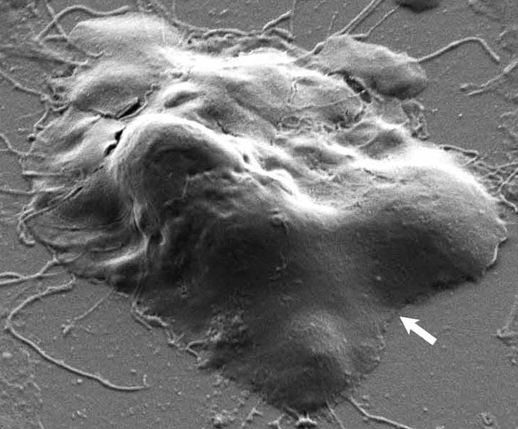
My interest in biology deepened at Peers School in Littlemore, a suburb of Oxford best known for its hospital that had opened in the 1840s as the Oxford County Pauper Lunatic Asylum. “Littlemore,” as the answer to the question, “Where were you schooled?” would not have worked quite as well as Magdalen or Radley where the students learn how to joust and swear in Latin. Plant life cycles fascinated me and I began to conduct some simple experiments on sperm release in ferns in my A-level biology class. Ferns have been discharging these corkscrew-shaped gametes onto the surface of wet soils for more than 400 million years. Human sperm cells have a single flagellum or tail; ferns have dozens of them, giving them a dreadlocked Rastafarian look. The release of clouds of these swimming cells is a marvelous sight under the microscope, and Mr. Bigwood, my biology teacher, was sufficiently impressed to encourage me to enter a project in the Oxford Schools Annual Science Fair.
The science fair submissions were judged by local academics and a visiting celebrity, Heinz Wolff (1928–2017), a well-known British scientist, who presented tv shows including The Great Egg Race in which teams competed to build clocks, musical instruments, and solar-powered contraptions for picking up dog turds. (I may have imagined the last one.) Wolff wore a bow tie and had the side-puffs only hairstyle of a circus clown. Quintessential mad scientist.
And there I sat, at a Formica-topped table with my microscope, demonstrating sperm release in ferns for anyone that stopped by. Wolff did and peered into my microscope. I was very pleased with myself for figuring out how to coerce explosions of swimming spermatozoids from tiny fern plantlets, so that they would burst into view a few seconds after I turned the microscope towards the viewer. In his heavy German accent he asked, “But vot experiment hev you performed here?” (Think Peter Sellers as Dr. Strangelove.) It was a reasonable question, although my reflexive thought was, “Fuck off, you cunt.” My project was observational and only minimally experimental, and suppressing my inside voice, I admitted as much. Bronze medal maybe? Not a chance. Honorable mention? Not even. Wolff was unimpressed and left my table shaking his head at what he appeared to consider was a brief encounter with a sixteen-year-old imbecile.
Mr. Bigwood came over when Wolff scuttled away, cursing him when he was beyond earshot with a fantastic train of expletives. “Biggie” was on my side and that meant everything. The prize winners that day were boys from a private school—ours was the local “comprehensive”—who had developed a tabletop nuclear reactor or something similarly brilliant. But Wolff did nothing to discourage me. Water off a duck’s back. And here I sit almost half a century later, with my professorial career coming to a close, and still marvel at the way that fern spermatozoids swim, mushrooms shoot their spores, and the rest of this magic roundabout turns.